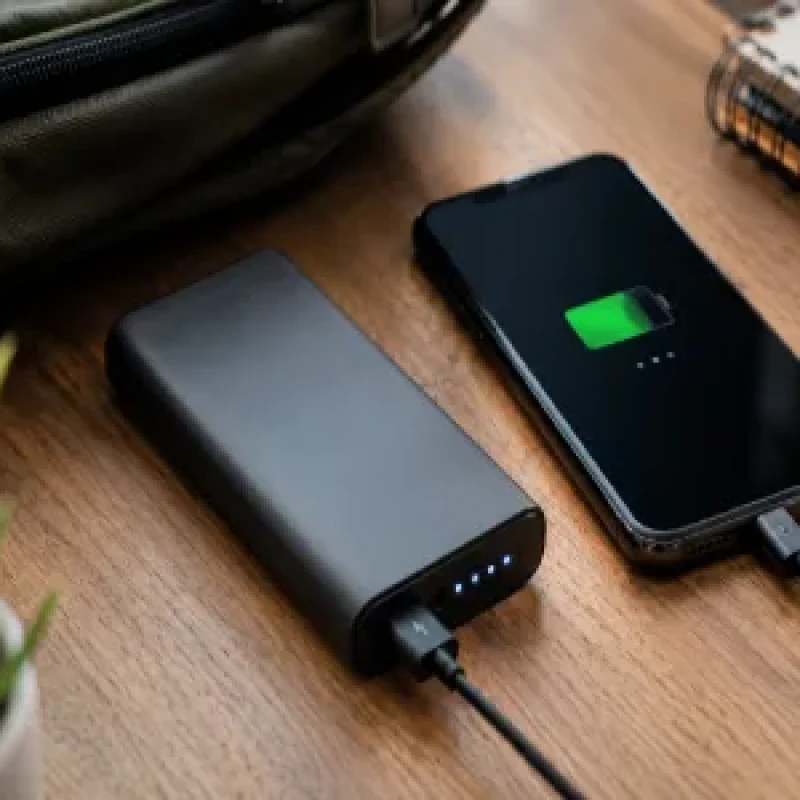
Before Buying a Power Bank: 3 Important Disadvantages You Should Know
Power banks have become one of the most popular accessories for smartphones, tablets, and other portable devices. As people rely more heavily on mobile technology for work, entertainment, and communication, having a portable charging solution is more important than ever.
A power bank can be extremely useful during travel, long workdays, or emergencies when no power outlet is available. However, despite their convenience, power banks also come with several disadvantages that every buyer should understand before making a purchase.
Choosing the right model is not just about battery capacity—it also involves safety, build quality, charging technology, and long-term reliability.
1. Fire and Overheating Risks
One of the biggest concerns with power banks is the potential risk of overheating or, in rare cases, catching fire.
Low-quality power banks often use inferior lithium-ion battery cells and lack advanced safety circuits. This can cause excessive heat during charging or discharging, increasing the risk of battery swelling, smoke, or even fire.
The danger becomes greater if the power bank is exposed to high temperatures, left inside a hot car, charged with incompatible chargers, or physically damaged.
For maximum safety, experts recommend purchasing products from reputable manufacturers that include protections against overcharging, overheating, short circuits, and overvoltage.
How to Identify a High-Quality Power Bank
Before buying a power bank, carefully review its specifications and customer reviews.
Look for products certified by recognized safety organizations such as CE, UL, or FCC, depending on your region.
Be cautious of extremely cheap models that advertise unusually high battery capacities, as these claims are often misleading.
Buying from authorized retailers and choosing products backed by a warranty can significantly reduce the risk of purchasing unsafe or counterfeit devices.
2. They Are Not Always as Convenient as They Seem
Power banks are designed to provide portable charging, but they also have practical limitations.
Higher-capacity models are typically larger and heavier, making them less comfortable to carry every day.
In addition, the power bank itself must be recharged regularly. Depending on its capacity and charging speed, this process can take several hours.
Therefore, while a power bank extends your device's battery life, it does not completely eliminate the need for access to electrical power.
The Actual Capacity Is Lower Than Advertised
Many users are surprised to learn that a power bank does not deliver its full advertised battery capacity.
Some energy is naturally lost during voltage conversion and power transfer between the power bank and the smartphone.
As a result, a 10,000mAh power bank may provide less usable energy than its rated capacity. This is a normal characteristic of portable batteries and should be considered when choosing the right capacity for your needs.
3. It May Affect Your Phone's Battery Health
Using a high-quality power bank properly is generally safe and should not damage your smartphone's battery.
However, low-quality power banks or unstable charging outputs may gradually reduce battery performance over time.
Constantly keeping your phone at 100% charge, exposing it to excessive heat while charging, or using poor-quality charging accessories can also accelerate battery aging.
Although modern smartphones include advanced battery management systems, proper charging habits remain essential for maintaining long-term battery health.
Tips to Extend Your Phone's Battery Life
Experts recommend keeping your battery level between approximately 20% and 80% whenever possible.
Use certified charging cables and chargers, avoid gaming or running demanding applications while charging, and never leave your phone charging under pillows or in poorly ventilated areas where heat can accumulate.
These simple habits can significantly extend the lifespan of your smartphone battery.
How to Choose the Right Power Bank
Battery capacity should not be the only factor when selecting a power bank.
Look for models that support modern fast-charging standards such as USB Power Delivery (USB-PD) or Qualcomm Quick Charge if your smartphone supports them.
Additional features such as USB-C ports, multiple charging outputs, battery level indicators, intelligent charging management, and comprehensive safety protections can greatly improve both convenience and reliability.
Is a Power Bank Worth Buying?
Despite these disadvantages, a quality power bank remains one of the most useful mobile accessories available today.
It provides reliable backup power during travel, outdoor activities, business trips, and emergencies.
The key is choosing a well-built product from a trusted brand rather than focusing solely on price. Investing in a safe, certified power bank can protect both your smartphone and your personal safety.
In an increasingly digital ecosystem — stretching from Arabic websites and specialized blogs, alongside insights drawn from Egypt-based online stores, Kuwait stores, and vitamin e-commerce platforms. personal account security is no longer optional.
Other Topics You May Also Be Interested In
Apple Warns iPhone Users: Never Put Your Phone Number on the Lock Screen if Your iPhone Is LostMajor Gmail Bug Hits Android UsersMeta Smart Glasses Let Users Type in the AirMicrosoft Reduces Copilot Presence in Windows 11
Google Launches New Offline Voice Dictation App for iPhone
Kaspersky Leads Cybersecurity Tests in 2025
Best Free Grok Alternatives for Creating Short Videos in 2026
ChatGPT Enters the App War
Microsoft Reduces Copilot Presence in Windows 11
Google Launches New Offline Voice Dictation App for iPhone
Kaspersky Leads Cybersecurity Tests in 2025
Best Free Grok Alternatives for Creating Short Videos in 2026
ChatGPT Enters the App War