OpenAI Launches GPT-Rosalind to Accelerate Drug Discovery
OpenAI Launches GPT-Rosalind to Accelerate Drug Discovery
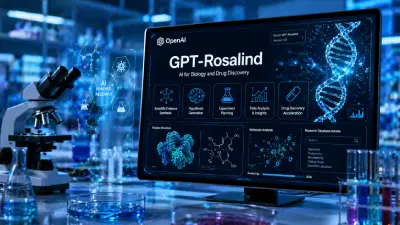
A new AI model designed for biology and scientific research
OpenAI has introduced a new AI model called GPT-Rosalind, specifically designed to support biological research and drug discovery. This launch comes as the use of artificial intelligence continues to grow rapidly in scientific fields that deal with massive and complex datasets, such as genomics, biochemistry, and protein analysis.
The model is named after Rosalind Franklin, the British scientist whose work played a key role in discovering the structure of DNA, highlighting OpenAI’s focus on advancing modern life sciences.
Advanced capabilities for researchers
GPT-Rosalind is built to assist scientists in a wide range of research tasks. For example, it can:
- Analyze scientific data
- Summarize research findings
- Generate hypotheses
- Design and plan experiments
- Handle multi-step research workflows
In addition, the model can access scientific databases, read the latest research papers, and suggest new experimental approaches. As a result, it helps researchers save time and improve productivity in early-stage discovery.
Speeding up a long and complex process
Developing a new drug is a long and costly process, typically taking 10 to 15 years, with only 1 in 10 drugs successfully reaching final approval after clinical trials.
Therefore, tools like GPT-Rosalind could play a critical role in accelerating early research phases, especially as more than 300 million people worldwide still need better treatments for rare and complex diseases.
Industry collaboration and growing adoption
OpenAI is already working with major organizations in the pharmaceutical and biotech sectors, including Amgen, Moderna, and Thermo Fisher Scientific, to integrate the model into real-world research workflows.
This reflects a broader trend, as AI adoption in drug discovery and life sciences continues to increase across companies and academic institutions.
Challenges and safety concerns
Despite its potential, AI-driven drug development is still in its early stages. So far, no drug fully developed using AI has reached Phase 3 clinical trials.
Moreover, experts have raised concerns about the possible misuse of such models, particularly in designing harmful biological agents. In response, more than 100 scientists have called for stricter regulations on access to sensitive biological data.
Conclusion
Overall, GPT-Rosalind represents a significant step forward in applying AI to biology and medicine. While it has the potential to transform how drugs are discovered, its success will depend on balancing innovation with ethical oversight and safety measures.