
OpenAI’s Pentagon Deal: Political Signals and the New AI Power Struggle
OpenAI’s Pentagon Deal: Political Signals and the New AI Power Struggle
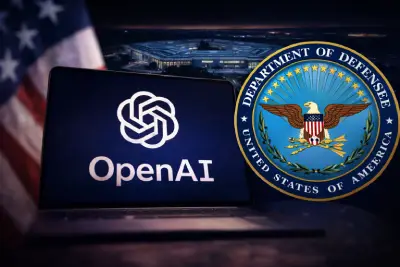
OpenAI’s Pentagon Deal: Political Signals, Security Boundaries, and the New AI Power Struggle
OpenAI’s recent agreement to deploy its technology within classified U.S. Department of Defense networks marks more than a commercial milestone. It represents a strategic inflection point in the relationship between frontier AI labs and national security institutions—one that could reshape the competitive balance among major AI companies.
This is not merely a contract. It is a geopolitical signal.
A Political Realignment in the AI Defense Market
The timing of the deal is significant. Shortly after the U.S. administration directed federal agencies to halt engagement with Anthropic and indicated potential supply chain concerns, OpenAI announced its own agreement with the Pentagon.
This sequence carries several political implications:
-
Selective trust in AI partners: The U.S. government is signaling that access to sensitive defense networks will depend not only on technical performance, but also on perceived alignment with national security priorities.
-
Institutional validation for OpenAI: Securing a classified deployment contract enhances OpenAI’s credibility in the government and enterprise sectors—arguably the most strategically valuable markets in AI.
-
Competitive pressure on rivals: Competitors such as Anthropic and Google now face heightened scrutiny, both regulatory and political, in their pursuit of defense-related contracts.
The defense AI market is no longer simply about innovation. It is about trust, control, and long-term strategic alignment.
Security Guardrails: Red Lines in a Military Context
OpenAI has emphasized that its agreement includes stricter safeguards than previous AI deployments in classified environments. The contract reportedly establishes three explicit red lines:
-
No use of OpenAI technology for mass domestic surveillance.
-
No integration into autonomous weapons targeting systems.
-
No deployment in high-risk automated decision-making contexts.
These provisions reflect an attempt to strike a delicate balance: supporting national defense capabilities without crossing ethical boundaries associated with AI militarization.
However, the complexity of modern defense systems raises a critical question:
Can AI truly remain separated from operational decision loops in advanced military environments?
The answer may define the future of defense AI governance.
Enterprise and Sovereign Contracts: The Real Battleground
While consumer adoption dominates headlines, the true long-term value in AI lies within enterprise and sovereign contracts. Government agreements provide:
-
Multi-year financial stability
-
Access to advanced infrastructure environments
-
Opportunities to test and refine systems under high-stakes conditions
Over the past year, the Pentagon has signed contracts worth up to $200 million each with several major AI laboratories, including OpenAI, Anthropic, and Google. This diversified approach reflects a strategy of risk distribution while maintaining technological leverage.
Winning these contracts is not just about revenue—it is about strategic positioning for the next decade of AI development.
The Risk of Gradual AI Militarization
The deeper integration of advanced AI systems into defense networks signals a broader structural shift. Artificial intelligence is increasingly central to:
-
Intelligence analysis
-
Cybersecurity operations
-
Logistics optimization
-
Predictive modeling and battlefield simulations
Even with guardrails in place, the acceleration of defense AI capabilities raises concerns about a gradual normalization of military AI dependence.
Without internationally coordinated frameworks, the competitive pressure among global powers could drive rapid advancements with limited oversight—particularly in areas adjacent to autonomous systems.
Strategic Independence vs. Government Leverage
OpenAI’s warning that any contractual breach by the U.S. government could lead to termination of the agreement is notable. It reflects an effort to maintain institutional autonomy despite entering highly sensitive partnerships.
Yet the balance of leverage in such relationships is complex. As AI becomes embedded in national security infrastructure, disentanglement may become increasingly difficult for both parties.
The broader question is not whether AI companies will work with governments—it is how deeply integrated they will become, and under what enforceable ethical constraints.
The Larger AI Power Contest
Ultimately, the Pentagon deal highlights a transformation in the AI race itself.
The competition is no longer defined solely by model performance benchmarks or consumer user counts. Instead, it now includes:
-
Government trust and political alignment
-
Security architecture robustness
-
Regulatory compliance capabilities
-
Ethical credibility in high-stakes environments
The company that successfully combines technical superiority with geopolitical reliability may secure a structural advantage for years to come.
Other Topics You May Also Be Interested In
VPN Networks: Do They Really Protect You from Tracking and Malware?
LAiPIC Launches Doratoon AI Platform to Generate Full Anime Episodes from a Single Text Prompt
OpenAI Prepares First Hardware Product: AI-Powered Smart Earbuds
Faraday Future Launches Humanoid and Quadruped AI Robots with Paid Preorders at NADA 2026